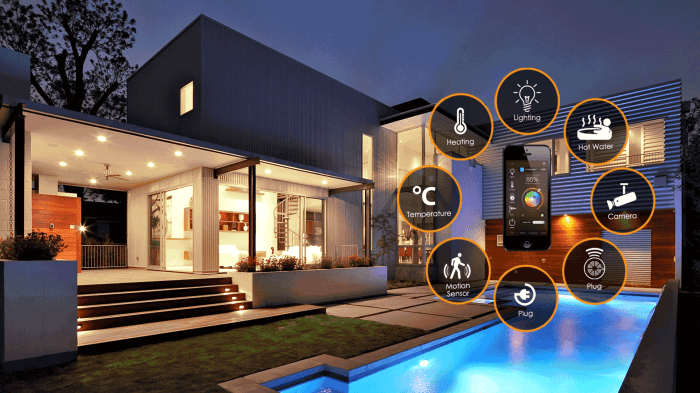
Imagine a home that anticipates your needs, subtly adjusting lighting and temperature to create the perfect ambiance. This isn’t science fiction; it’s the reality offered by smart home accents. These innovative devices seamlessly blend technology with aesthetics, transforming ordinary living spaces into personalized havens of comfort and convenience. They offer more than just automation; they represent a thoughtful evolution in home design, enhancing both functionality and style.
From voice-activated lighting to smart thermostats and security systems disguised as elegant décor, smart home accents provide a unique opportunity to upgrade your home without compromising on design. This exploration delves into the various types, benefits, and considerations involved in integrating these sophisticated additions into your living environment.
Defining “Smart Home Accents”
Smart home accents represent a fascinating intersection of technology and interior design. They go beyond purely decorative items, incorporating smart functionalities that enhance convenience, comfort, and even home security, while still maintaining an aesthetically pleasing presence within a living space. Unlike traditional home accents, which serve primarily as decorative elements, smart home accents offer an added layer of interactive capabilities.Smart home accents are characterized by their integration with smart home ecosystems.
This integration allows for remote control, automation, and often, connectivity with other smart devices within the home. Key features include voice activation, app-based control, sensor integration (such as motion or light sensors), and often, energy efficiency capabilities. For instance, a smart lamp not only provides illumination but also adjusts brightness based on ambient light levels or user preferences, all controlled through a smartphone app or voice command.
This contrasts sharply with a traditional lamp, which serves only its basic function of providing light.
Comparison of Smart Home Accents and Traditional Home Décor
Smart home accents differ significantly from traditional décor in their functionality and cost. Traditional décor items, such as decorative pillows or vases, serve primarily aesthetic purposes. Their value lies in enhancing the visual appeal of a room. Smart home accents, however, combine aesthetic appeal with technological functionality. This added functionality increases their cost compared to their traditional counterparts.
The trade-off is the convenience and enhanced control they provide. For example, a traditional candle provides ambiance, while a smart candle offers the same ambiance with the added ability to control its brightness and even its scent remotely.
Price Points, Features, and Aesthetic Styles of Smart Home Accents
The following table illustrates the varying price points, features, and aesthetic styles available in smart home accents. The price ranges are approximate and can vary depending on brand, features, and retailer.
| Item | Price Point (USD) | Key Features | Aesthetic Style |
|---|---|---|---|
| Smart Bulb | $10 – $50 | Remote control, color changing, scheduling, voice activation | Varies widely; available in various shapes and colors |
| Smart Speaker | $50 – $300 | Voice control, music playback, smart home integration, hands-free calling | Modern, minimalist, or classic designs depending on the brand |
| Smart Plug | $15 – $40 | Remote control of appliances, energy monitoring, scheduling | Generally discreet and unobtrusive |
| Smart Thermostat | $100 – $300 | Automated temperature control, energy saving features, remote access | Modern, sleek designs; some models blend in with traditional décor |
Types of Smart Home Accents
Smart home accents are more than just functional additions; they’re the elements that elevate your living space while seamlessly integrating technology. They range from subtle enhancements to statement pieces, all working together to create a comfortable and convenient environment. Understanding the different types and their capabilities is key to choosing the right accents for your home.Smart home accents can be broadly categorized based on their primary function, with many overlapping capabilities.
This categorization helps to understand the specific role each accent plays in the overall smart home ecosystem. The technologies integrated within these accents offer a range of control options and customization opportunities.
Smart Lighting Accents
Smart lighting accents offer more than just illumination; they provide ambiance, security, and energy efficiency. Integration with smart home platforms allows for remote control, scheduling, and even scene creation. These accents often incorporate technologies such as voice control (Alexa, Google Assistant), app integration (for remote operation and scheduling), and sometimes even sensors for occupancy detection or ambient light level adjustment.
- Low: Smart LED bulbs offering basic color changing and dimming capabilities via a smartphone app. These often lack advanced features like scheduling or integration with other smart home devices.
- Medium: Smart light strips with app control and integration with popular smart home ecosystems. These may offer a wider range of colors and effects, potentially including music synchronization.
- High: Advanced smart lighting systems with multiple zones, integrated sensors for automation, and sophisticated scene creation capabilities. These systems often include professional installation and higher-end fixtures.
Smart Climate Control Accents
Smart climate control accents go beyond basic thermostats, offering precise temperature regulation, energy savings, and enhanced comfort. These accents often leverage sensors to monitor temperature and humidity, adjusting accordingly to maintain optimal conditions. Many integrate with smart home platforms for remote control and scheduling.
- Low: Smart plugs that allow for remote control of existing fans or heaters. Functionality is limited, but provides a cost-effective entry point into smart climate control.
- Medium: Smart thermostats with app control and basic scheduling features. These offer improved energy efficiency compared to traditional thermostats.
- High: Advanced smart HVAC systems with zone control, sophisticated algorithms for energy optimization, and integration with other smart home sensors for proactive climate adjustment. These systems may include advanced features like air quality monitoring.
Smart Security Accents
Smart security accents provide an added layer of protection and peace of mind. These accents often integrate with broader security systems, offering features such as remote monitoring, alerts, and automated responses. Key technologies include motion sensors, cameras, and smart locks.
- Low: Smart security cameras with basic motion detection and cloud storage. These may offer limited features and require a subscription for cloud services.
- Medium: Smart door locks with keypads and app control, offering remote locking/unlocking and access management. These may include integration with other smart home devices.
- High: Comprehensive smart security systems with multiple cameras, sensors, and integrated alarm systems. These often include professional monitoring services and advanced features like facial recognition.
Benefits and Drawbacks of Smart Home Accents
Smart home accents offer a compelling blend of convenience, aesthetics, and technological advancement, seamlessly integrating into modern living spaces. However, as with any technology, understanding both the advantages and potential downsides is crucial before embracing these innovative additions to your home. This section will explore the key benefits and drawbacks, providing a balanced perspective to aid in informed decision-making.
Advantages of Smart Home Accents
The incorporation of smart home accents provides several significant advantages that enhance comfort, efficiency, and overall living experience. These benefits extend beyond mere convenience, impacting energy consumption, security, and even property value.
- Enhanced Convenience and Control: Smart lighting, for example, allows for automated scheduling and remote control, eliminating the need to manually switch lights on and off. This is particularly beneficial for managing lighting while away from home or for creating personalized lighting scenes for different moods or activities.
- Improved Energy Efficiency: Many smart home accents, such as smart thermostats and lighting systems, offer energy-saving features. Smart thermostats learn user preferences and adjust temperatures accordingly, while smart lighting can automatically turn off lights in unoccupied rooms, reducing energy waste and lowering utility bills. A smart thermostat, for instance, can reduce energy consumption by up to 15% according to the U.S.
Department of Energy.
- Increased Home Security: Smart security cameras, door locks, and motion sensors enhance home security by providing real-time monitoring and alerts. These systems can deter intruders and provide peace of mind, even when away from home. For example, receiving a notification on your smartphone when a motion sensor detects activity outside your house at night offers a significant security benefit.
- Aesthetic Enhancement: Smart home accents are often designed with aesthetics in mind, seamlessly blending into existing home décor. Smart lighting, for example, can offer a wide range of colors and brightness levels, allowing for personalized ambiance and mood lighting. This enhances the overall visual appeal and creates a more personalized living space.
Disadvantages and Limitations of Smart Home Accents
While offering numerous advantages, smart home accents also present certain limitations and potential drawbacks that should be considered.
- Initial Cost: The upfront cost of purchasing and installing smart home accents can be significant, especially when incorporating multiple devices and systems. This initial investment might deter some homeowners from adopting this technology.
- Technical Complexity: Setting up and managing smart home systems can be technically challenging for some users. Troubleshooting connectivity issues and integrating different devices from various manufacturers can require a level of technical expertise.
- Security and Privacy Concerns: Smart home devices collect data about user behavior and preferences, raising concerns about data privacy and security. Vulnerabilities in these systems could potentially expose personal information to unauthorized access or cyberattacks. It is crucial to choose reputable brands and implement strong security measures to mitigate these risks.
- Dependence on Technology and Internet Connectivity: Smart home accents rely heavily on internet connectivity and technology. Power outages or internet disruptions can render these devices inoperable, limiting their functionality and potentially causing inconvenience.
Energy Efficiency Comparison: Smart vs. Traditional
Smart home accents often demonstrate superior energy efficiency compared to traditional alternatives. Smart thermostats, for instance, learn user preferences and adjust temperatures accordingly, reducing energy waste compared to manually controlled thermostats. Similarly, smart lighting systems can automatically turn off lights in unoccupied rooms, saving energy compared to leaving lights on unnecessarily. Studies have shown that smart thermostats can reduce energy consumption by 10-15%, while smart lighting can reduce energy consumption by up to 50% depending on usage patterns.
Security and Privacy Implications
The interconnected nature of smart home accents raises concerns about security and privacy. Data breaches and unauthorized access to personal information are potential risks. It’s essential to choose reputable brands with robust security features, strong passwords, and regular software updates. Additionally, users should carefully review privacy policies and understand how their data is collected and used. For example, the use of strong and unique passwords for each device, along with enabling two-factor authentication whenever possible, can significantly enhance security.
Regularly updating firmware also patches security vulnerabilities, reducing the risk of intrusion.
Smart Home Accents vs. Home Accents
Smart home accents and traditional home accents both serve the purpose of enhancing the aesthetic appeal of a living space, but they achieve this through vastly different means and with varying levels of complexity. While traditional accents focus primarily on visual appeal and tactile experience, smart home accents layer in technological functionality, impacting not only how a room looks but also how it functions.
This comparison explores the key distinctions between these two approaches to home décor.Aesthetic Appeal and Technological IntegrationSmart home accents often prioritize a minimalist, modern aesthetic, frequently featuring sleek lines, subtle colors, and integrated technology that is not overtly visible. Traditional home accents, conversely, embrace a wider range of styles, from rustic and antique to bohemian and contemporary, with a focus on texture, color, and craftsmanship.
The visual impact of smart home accents can be understated elegance, while traditional accents offer greater versatility and expressiveness in style.Installation and MaintenanceInstalling traditional home accents typically involves straightforward placement and arrangement. Hanging a picture, placing a vase, or arranging throw pillows requires minimal technical expertise. Smart home accents, however, necessitate more technical setup. Connecting smart lighting, integrating smart speakers, or installing smart thermostats often requires understanding of home networks, app interfaces, and potentially, professional installation.
Maintenance also differs; traditional accents might require occasional dusting or cleaning, while smart home accents might require software updates, troubleshooting connectivity issues, or replacing batteries.Seamless Integration with Existing DécorSmart home accents can integrate seamlessly into existing décor through careful selection and placement. For example, a smart lamp with a traditional design can replace a standard lamp, adding smart functionality without altering the overall style.
Similarly, smart picture frames can showcase family photos while offering the added benefit of easily updating the displayed images remotely. Smart home accents can also be strategically used to enhance existing features; for instance, smart lighting can be used to highlight a particularly beautiful piece of traditional artwork.Visual Comparison: Traditional vs. Smart Home AccentsImagine two images depicting the same living room.
The first shows a room decorated with traditional accents. A plush, patterned rug covers the floor, an ornate mirror hangs above a fireplace mantel, and several framed paintings adorn the walls. Throw pillows in various textures and colors add visual interest to a comfortable sofa. The overall effect is warm, inviting, and richly textured, showcasing a variety of colors and patterns.
The second image depicts the same room, but with smart home accents. The rug is a simple, neutral color, and the artwork is replaced by a large, minimalist canvas. A sleek, smart speaker sits discreetly on a side table, and the lighting is subtly adjusted through a smart home system. The overall effect is cleaner, more modern, and subtly sophisticated.
While the traditional room is busy and expressive, the smart home room is calm and understated, highlighting functionality and technological integration within a minimal aesthetic.
Integration and Compatibility
Smart home accents, while aesthetically pleasing, are only truly effective when seamlessly integrated into your existing smart home ecosystem. Their ability to communicate and cooperate with other devices determines their overall utility and convenience. Understanding the nuances of integration and compatibility is crucial for a successful smart home experience.Smart home accents typically integrate with other devices through various communication protocols, most commonly Wi-Fi, Bluetooth, and Zigbee.
Wi-Fi allows for broader range and internet connectivity, enabling control through smartphone apps and voice assistants like Alexa or Google Assistant. Bluetooth offers shorter-range, lower-power communication, ideal for smaller, less data-intensive accents. Zigbee, a mesh networking protocol, provides reliable communication even in challenging environments, often used for smart lighting and sensors. The specific protocol used will dictate how the accent interacts with other devices in your home.
Compatibility Considerations
Choosing smart home accents requires careful consideration of compatibility. Before purchasing, verify the accent’s compatibility with your existing smart home hub or platform (e.g., Amazon Alexa, Google Home, Apple HomeKit, Samsung SmartThings). Incompatibility can render an accent useless, preventing control through your preferred app or voice assistant. Check the manufacturer’s specifications for supported platforms and protocols. For instance, a smart accent using the Zigbee protocol may not work directly with a hub only supporting Wi-Fi.
Interoperability Challenges
While many manufacturers strive for interoperability, challenges remain. Different brands often utilize proprietary protocols or variations of standard protocols, leading to compatibility issues. A smart lamp from one manufacturer might not integrate seamlessly with a smart thermostat from another, despite both being advertised as “smart home compatible.” This fragmentation limits the overall functionality and convenience of a smart home system.
Open standards like Matter are emerging to address these issues, but full adoption across the industry remains a work in progress.
Smart Home Accent Setup and Connection Flowchart
The following flowchart illustrates a typical process for setting up and connecting various smart home accents. This is a generalized example; the specific steps may vary depending on the brand and type of accent. Start –> Choose Smart Home Accent –> Check Compatibility with Existing System (Hub/Platform) –> Download and Install Required App –> Power On Accent –> Follow App Instructions for Setup (Usually involves network connection and device pairing) –> Test Functionality –> Integrate with Other Smart Home Devices (e.g., create scenes or automations) –> EndThis flowchart depicts a straightforward process.
However, troubleshooting steps might be needed at any stage, particularly if compatibility issues arise. For instance, if the accent fails to connect to the Wi-Fi network, checking the router settings, network password, and accent’s Wi-Fi capabilities is crucial. Similarly, if the accent doesn’t respond to voice commands, ensuring it’s properly linked with the voice assistant is essential.
Smart home accents represent a compelling convergence of technology and design, offering homeowners a pathway to enhanced comfort, efficiency, and security. While considerations regarding compatibility and privacy are important, the benefits of personalized automation and aesthetic integration far outweigh the potential drawbacks. As technology continues to evolve, we can anticipate even more sophisticated and seamlessly integrated smart home accents that redefine the concept of a comfortable and connected home.
FAQ
What is the average lifespan of a smart home accent?
The lifespan varies depending on the device and brand, but many smart home accents have a lifespan of 5-7 years with proper maintenance.
Are smart home accents difficult to install?
Installation complexity varies greatly depending on the device. Some are plug-and-play, while others may require professional installation.
How much does it cost to set up a smart home accent system?
Costs range widely, from a few hundred dollars for a single device to several thousand for a comprehensive system. Consider your budget and desired functionality.
Can I control smart home accents remotely?
Most smart home accents offer remote control via smartphone apps, allowing you to manage your home environment even when you’re away.